
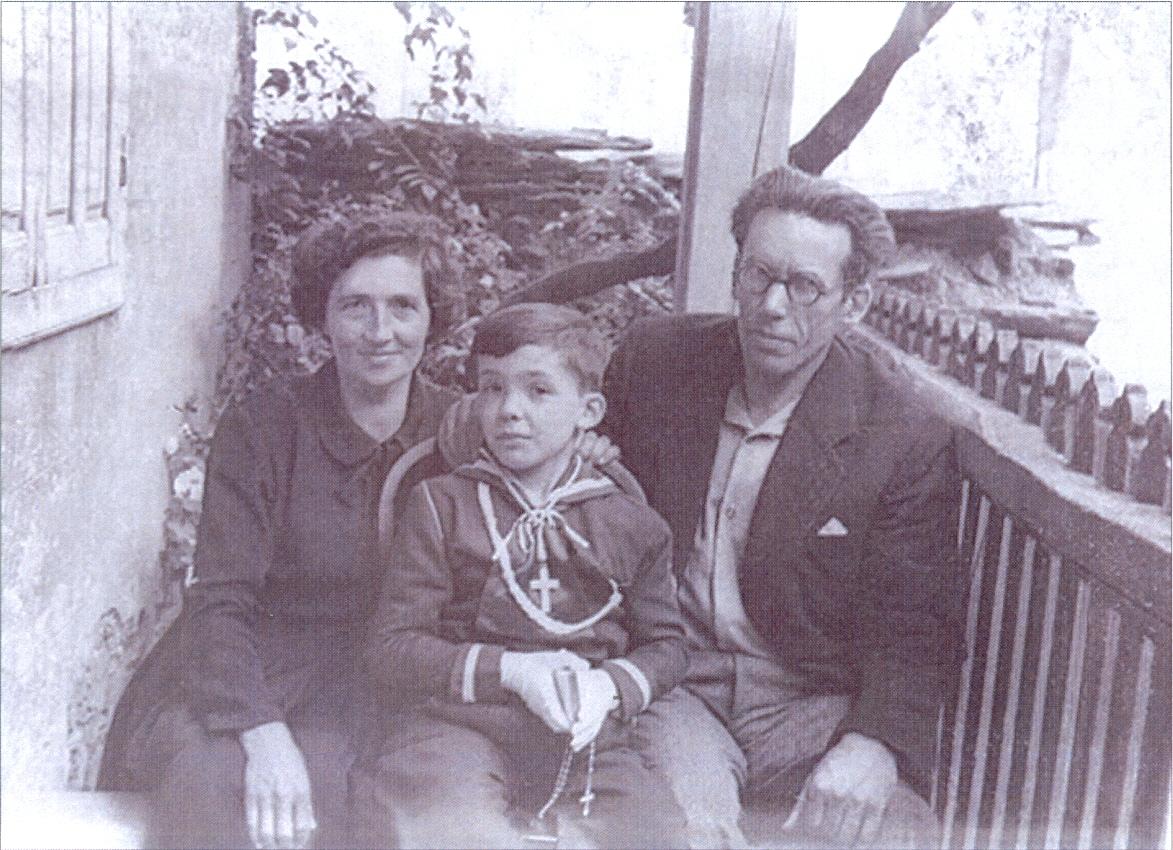
In the history of the Galician language, there are figures who stand out for their tireless endeavour and commitment to their own culture without seeking recognition or praise. Among them, the figure of Aníbal Otero Álvarez stands out, a Galician philologist whose life unfolded between a profound love for words and the weight of a convulsive period, marked by war, prison and silence; a man who dedicated his life to collecting the voices of his land and defending them even when everything seemed to push them into oblivion.
First Steps and Philological Vocation
Aníbal Otero was born in 1911 in Barcia, a small hamlet in the interior of Galicia. From a very young age, Otero was drawn to the study of language, a passion that led him to study Philosophy and Letters at the Complutense University of Madrid. While many young people in the turbulent 1930s marched under flags, he carried notebooks. It was during this period that he took part in one of the most ambitious projects in Hispanic dialectology: the Atlas Lingüístico de la Península Ibérica (ALPI), directed by Tomás Navarro Tomás and Ramón Menéndez Pidal.
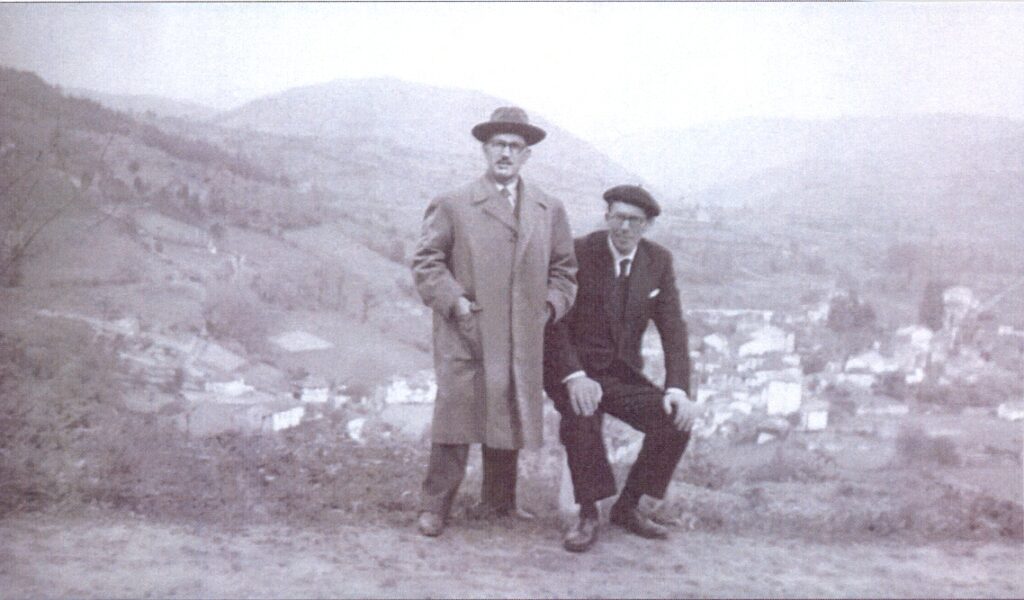
The ALPI represented a quasi-quixotic adventure: it sought to document, with rigor, how people spoke in every corner of the peninsula. Otero was assigned Galicia and northern Portugal, where he conducted field surveys with a meticulousness that still astounds us today. Armed with a complex phonetic alphabet and a finely tuned ear, he interviewed farmers, fishermen, elders; he recorded how they named water, bread, wind. Each word was a living fossil, a trace of linguistic evolution. Otero was not just a word-gatherer: he was an interpreter of the intangible.
From Philologist to "Spy": Prison and Survival
But language never exists in isolation. The convulsive political context in which he carried out his research soon turned Otero’s work into a source of suspicion. Thus, in August 1936, while carrying out his fieldwork in Portugal, Otero was arrested by the police of the Salazarist regime. They distrusted him because he carried notebooks with «strange» signs, notes in a technical alphabet unfathomable for those who arrested him. It was certainly the international phonetic alphabet, but it looked like a cipher code.
Amid the escalation of the war, he was accused of espionage and handed over to Franco’s authorities. He was imprisoned, court-martialled, and sentenced to death. His crime: listening and writing down how the people of the countryside spoke. He was saved, in part, by letters that his mother handed over to the judges: letters from Navarro Tomás certifying that Aníbal was not a spy, but a linguist.
Despite the pardon, he endured five years in prison, some of them on the sinister island of San Simón, converted by the regime into a concentration and extermination camp for anti-Franco political prisoners. He was released in 1941, with no resources, no recognition, and no real possibility of returning to his former life. He had paid a very high price for his dedication to language.
Language as a refuge
After his release from prison, Otero returned to his home village of Barcia. He did not return to Madrid or to academic circles; nor did he continue to participate in the ALPI, which continued without him. He became an almost ascetic figure: a sage retired to the countryside, surrounded by the very words he had once studied, but now as a peasant rather than a philologist. The traumatic experience in prison left an indelible mark on his mind.
However, he did not completely abandon his vocation. Since his retirement, he continued his research in silence. He compiled vocabulary, reflected on etymologies, and wrote articles that appeared in specialised journals such as Cuadernos de Estudios Gallegos. His study of Galician and Portuguese voices —both synchronic and diachronic— places him today as one of the great pioneers of Galician dialectology.
In 1977, three years after his death, his Vocabulario de San Jorge de Piquín was published. Dense and precise, the work reflects his profound commitment to rural Galician. Each entry was a rescued treasure: words rescued from the brink of oblivion, documented with the accuracy of those who love what they name.
Language and Resistance: Otero's Legacy
What makes Aníbal Otero exceptional is not only his technical brilliance, but also his moral consistency. He could have renounced Galician, dialectal study, or his commitment to philology. He could have joined the official discourse of Franco’s regime, which reviled and condemned any sign of regional particularity. But he did not. He chose the loneliest path: that of knowledge without applause.
Today, his name is not among the most famous people in Hispanic philology. But for those who know the history of ALPI and the beginnings of Galician dialectology, Aníbal Otero is a key figure. His work forms part of the foundations upon which Galician linguistic standardisation in the 20th century was built. In addition, his field notebooks, notes, and articles are still cited, consulted, and highly valued by specialists.
In 2011, the University of Vigo dedicated a monographic issue of the journal Hesperia to him. It was a modest act of justice: his texts were re-examined, his life was contextualised, and the letters that saved him from the firing line were published for the first time. Gradually, Otero regained his voice.
In short, the story of Aníbal Otero is not only that of an unjustly persecuted Galician linguist; it is also a lesson on the power of words and the fragility of those who study them. He reminds us that science —when it is honest, when it is free— can become subversive, especially in contexts of oppression and intolerance. Otero died in 1974, without a noise. But his life itself was a declaration: that language is memory, that popular culture deserves respect, and that listening to others is an act of dignity.
Carlos Sánchez Luis