
The arrival of the printing press in 1450 revolutionised the production of books and changed the way ideas circulated across society. For the first time, works that had once been confined to monasteries or private libraries could be reproduced and made available to a much wider audience. However, religious and political authorities regarded this innovation with suspicion, seeing it as a threat to their control.
In Europe, the Protestant Reformation made strategic use of the press to rapidly distribute sermons, Bible translations, and texts critical of the Catholic Church at a pace that outstripped traditional mechanisms of control. In response, religious authorities introduced new systems of surveillance and censorship to restrict their circulation.
The Control of the Church and Political Power
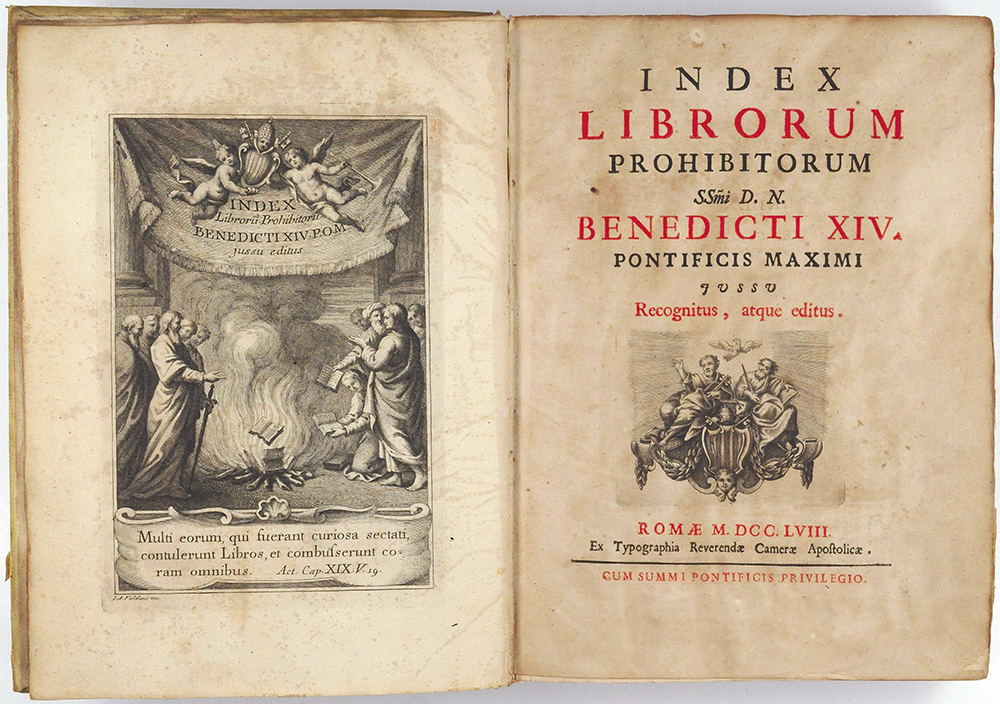
One of the most emblematic measures was the creation of the Index Librorum Prohibitorum (Index of Forbidden Books) by the Catholic Church in 1559. This list included books considered heretical or immoral —from Protestant writings to literary, philosophical and scientific works. Printers, authors, and translators were required to comply with these regulations under penalty of fines, or, in extreme cases, execution. The most well-known example is that of Giordano Bruno, who was executed in 1600 for disseminating cosmological and theological ideas in various languages.
In addition to the Church, many European monarchs introduced their own control systems. The press enabled rapid spread of political pamphlets, satires, critiques of power or alternative interpretations of sacred texts —all of which alarmed the authorities. As a result, many countries introduced prior censorship: texts had to be submitted for approval before printing, and printers needed an official licence to publish any work. In France, for example, only a handful of printers were authorised to publish books, and every book required royal privilege before it could be published. In England, Parliament passed the Licensing Order in 1643, which required authors to register their works before printing. Even officially approved texts could later be banned: in Spain, for example, philosophical works allowed under Charles III were later censored under Charles IV.
These systems created a climate of constant self-censorship and surveillance. Many authors toned down their texts in anticipation of censorship; others published abroad, and some —such as Jovellanos— circulated manuscripts clandestinely to avoid persecution. Yet despite these efforts at control, the circulation of banned texts was never fully suppressed. Instead, it gave rise to a clandestine publishing scene. In countries like the Netherlands and Switzerland, where these regulations were not as strict, forbidden books were printed and then distributed covertly across Europe.
Censorship in Spain
Spain was one of the first countries to introduce the printing press, around 1470, but it did so under intense scrutiny. The Inquisition supervised not only religious content but profane works that could be deemed immoral or subversive. In the 16th and 17th centuries, censorship particularly targeted literary works originating from Italy. Works such as Giovanni Florentino’s Il Pecorone or some editions of Jacopo Sannazaro’s La Arcadia were banned for their amorous or sensual tone, which was seen as inappropriate by Catholic moral standards.
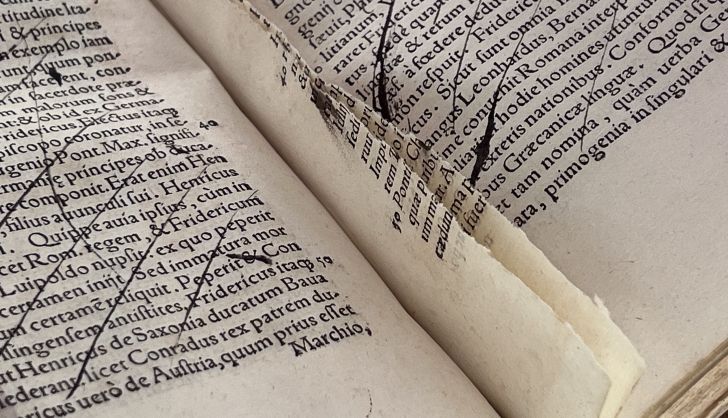
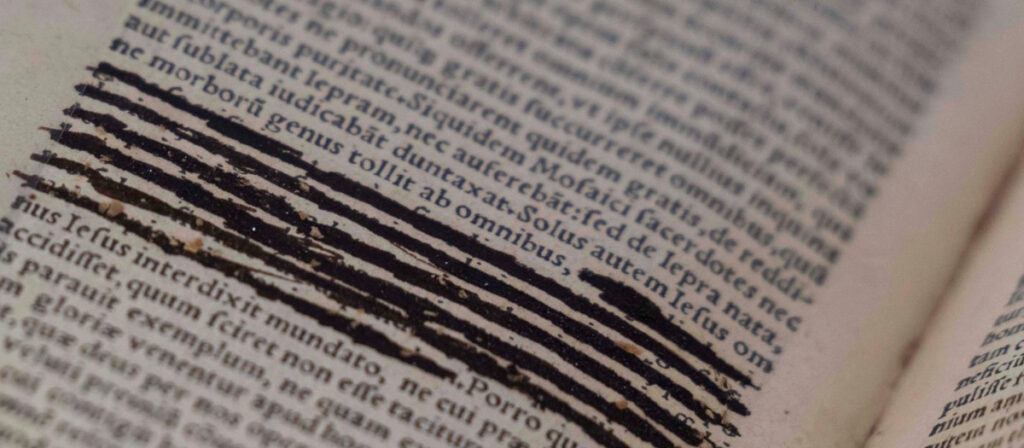
Censorship did not only apply to entire books, but also to specific passages, words, or even names. Surviving copies from the period often show crossings-out, substitutions, and partial rewritings— especially in texts containing references to religion, politics, or sexuality. The archives of Spain’s National Library preserve specific instructions such as: “Cross out the name of Venus due to its lascivious connotation.” Furthermore, to justify publication and avoid reprisal, translators and editors often added moral warnings or critical commentary. Statements like “This text is offered as an example of the mistakes to be avoided” or “I translate solely for educational purposes” served as strategies to distance the author from the content.
The Transition Towards Liberalism and Press Freedom
It was not until the 19th century that Spain began to break away from this long-standing tradition of censorship. In 1810, the Cádiz Cortes issued a decree that legally abolished prior censorship for the first time. This shift was not only legal but also conceptual: Spain transitioned from a system of preventative control to one of post-publication accountability. Authors no longer needed permission to publish their work, but they could still be prosecuted (and even imprisoned) if their content was deemed to undermine religion, morality, or national security. The aim was to encourage public debate and a free political press at a time when Spain was attempting to legitimise its new constitutional regime. However, this period of relative freedom was short-lived: in 1814, with the restoration of absolutism under Ferdinand VII, prior censorship was reinstated, and those who had taken advantage of that brief period of freedom were actively persecuted.
Over the following decades, press freedom gradually expanded. Yet many censorship practices, rather than disappearing, adapted to new political contexts. Under Franco’s regime, for instance, the revision and censorship of literary translations remained in place under the control of the Ministry of Information, which continued practices rooted in inquisitorial and absolutist traditions. This historical continuity helps to explain the complexity of the history of free speech in Spain.
Maddi Orue Azpiazu