

Translation always occupied a preeminent place in the personal and intellectual development of Argentine writer Jorge Luis Borges (1899-1986), considered a key figure in both Spanish-language and universal literature. In addition to his prolific activity as a translator, Borges dedicated numerous interesting essays to reflect on his own conception of translation and the problem of translating.
With this short article, we intend, on the one hand, to highlight the preeminent place that translation plays in Borges’ creative process and, on the other hand, to underline his conception of translation as a tool of culture.
Borges and translation: the origins
One of the most interesting aspects of Jorge Luis Borges’ life is the multicultural heritage he received. His genealogical tree connects him with illustrious Argentinean lineages of Creole origin, as well as with families from the Old World.
His father, Jorge Guillermo Borges, belonged to a family of Portuguese origin, although his paternal grandmother was a native of England, which meant that Spanish and English were spoken interchangeably in the Borges home. Jorge Guillermo was an avid reader and had a great interest in literature, a hobby he would pass on to his son. On the other hand, his mother, Leonor Acevedo Suárez, was a cultivated woman who translated from English and French throughout her life.
In 1914, the Borges family traveled to Europe and eventually settled in Geneva, where their children continued their studies. Subsequently, the Borges moved to Spain, where they stayed for a few years, before returning to Buenos Aires in 1921.
During his stay in Europe, Borges grew up as a young teenager who tirelessly devoured the works of great French, English, German and Spanish writers. This rich cultural mix would eventually awaken his interest in translation.

The work of Jorge Luis Borges
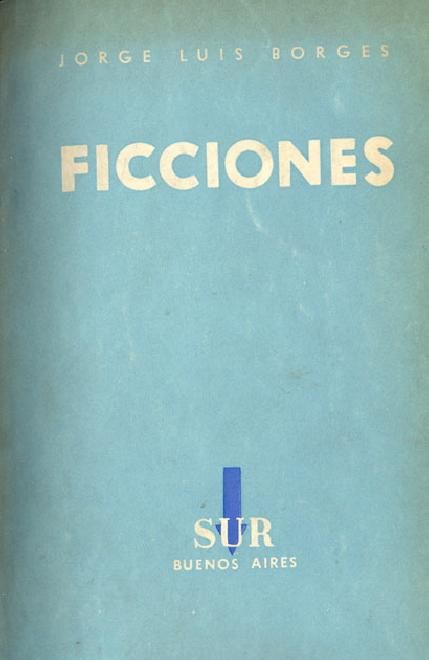
It was after his return to Buenos Aires when Borges began to develop his literary career, becoming the Argentine author with the greatest universal influence. It is practically impossible to conceive of 20th century Spanish-American literature without taking him into account, since his most representative books of short stories, such as Ficciones and El Aleph (both published in the 1940s), have contributed enormously to defining the course of contemporary world literature.
Borges was the creator of a very special worldview, based on a characteristic way of understanding concepts such as time, space, destiny and reality. His stories and essays are nourished by complex symbolisms and a strong erudition, fruit in large part of his fondness for European literature, especially Anglo-Saxon.
Translation as a cultural tool
«Reading has always pleased me more than writing,» declared Borges on numerous occasions, who never ceased to insist on two issues: that translation must be conceived as a literary genre in its own right, like novels, poetry or essays, and that translating is still «a form of reading».
As he always pointed out (in his autobiography and in several interviews), his culture was built on translations, and he always believed that translating was a way to create culture and to enhance the language by introducing echoes of other languages into it.
For Borges, each translator, in the performance of their work, shows a particular concept of literature that dominates in their own language.
Borges the translator
For the Argentinean, translation was not only his literary modus operandi, but he assimilated it as a true modus vivendi. In this sense, his activity was not just limited to the dissemination of foreign authors and movements, but also to translating their works into Spanish.
The list of translations of memorable works by Borges is innumerable. However, probably the most outstanding are the ones he did for Virginia Woolf’s Orlando, Herman Melville’s Bartleby or Franz Kafka’s The Metamorphoses.
Borges the translator practices a methodology that could be described as «creative infidelity», because, although he does not ignore the literality of the texts, his translations are quite autonomous, insofar as they seek to reproduce an «aesthetic emotion» that is as credible as that of the original.

«The two ways of translating» by Borges
In one of his essays, Borges reflects on the different ways in which the translation of a text can be approached. The writer contrasts two types of translations, showing their predilection for a type of translation that is freer and less attached to the original text.
The following are some excerpts from this essay, entitled «The two ways of translating»:
It is usually assumed that any original text is incorrigibly good, and that translators are irreparable bunglers, fathers of frangollo and lies. The Italian sentence of traduttore traditore is inferred, and this joke is enough to condemn them. […].
The difficulties of translation are manifold […]. In prose, the current meaning is the valid one and finding its equivalence is usually easy. In verse, mostly during the so-called periods of decadence, that is, of literary idleness and mere remembrance, it’s a different case. There, the meaning of a word is not what counts, but rather its atmosphere, its connotation, its gesture. Words become incantations and poetry wants to be magical. It has its magic roundels and its incantations, not always legal tender outside the country. […].
It is usually assumed that any original text is incorrigibly good, and that translators are irreparable bunglers, fathers of frangollo and lies. The Italian sentence of traduttore traditore is inferred, and this joke is enough to condemn them. […].
The difficulties of translation are manifold […]. In prose, the current meaning is the valid one and finding its equivalence is usually easy. In verse, mostly during the so-called periods of decadence, that is, of literary idleness and mere remembrance, it’s a different case. There, the meaning of a word is not what counts, but rather its atmosphere, its connotation, its gesture. Words become incantations and poetry wants to be magical. It has its magic roundels and its incantations, not always legal tender outside the country. […].
Universally, I suppose there are two kinds of translations. One practices literalism, the other periphrasis. The first corresponds to romantic mindsets; the second to classical ones. I would like to explain this statement, in order to diminish its air of paradox. Classical mentalities will always be interested in the work of art and never the artist. They will believe in absolute perfection and they will seek it. They will disdain localisms, oddities, contingencies. Shouldn’t poetry be a beauty like the moon: eternal, dispassionate, impartial? Metaphor, for example, is considered by classicism neither as emphasis nor as a personal vision, but as an attainment of poetic truth, which, once it has been achieved, can (and should) be enjoyed by all. Each literature possesses a repertoire of these truths, and the translator will know how to take advantage of it, and will know how to translate the original not only into words, but also into the syntax and the usual metaphors of their language. This procedure seems sacrilegious to us, and sometimes it is. […].
Conversely, the romantics never ask for the work of art, they ask for the man. And man (as we know) is not timeless or archetypal, he is Diego Fulano, isn’t he, he is Juan Mengano, he possesses a climate, a body, an ancestry, a doing of something, doing nothing, a present, a past, a future and even a death of his own. Beware of twisting a single word left written! […].
This reverence for the self, for the irreplaceable human differentiation that is any self, justifies the literalness in translations. In addition, the distant, the foreign, is always beauty […]. The announced purpose of veracity makes the translator a falsifier, since, in order to maintain the strangeness of what they translate, translators are obliged to increase the local color, to make the crudeness cruder, to cloy it with sweetness and to emphasize everything to the point of lying. […].
1926
Carlos Sánchez Luis