
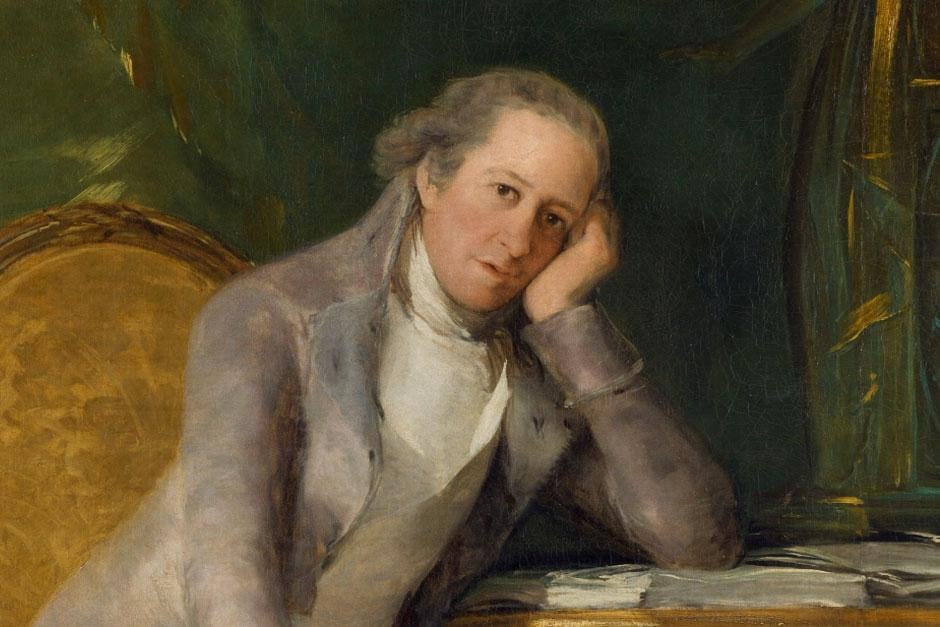
The history of the Asturian language -popularly known as Bable- is closely linked to the cultural identity of the Principality of Asturias. Over the centuries, the language has withstood political, social and cultural pressures, and has been kept alive thanks to the work of intellectuals, poets and thinkers committed to its defence. Among them, the figure of Gaspar Melchor de Jovellanos (1744-1811), one of the greatest Spanish Enlightenment figures and a fervent defender of Asturian cultural heritage, stands out.
Gaspar Melchor de Jovellanos: a brief biographical note
Gaspar Melchor de Jovellanos was born in Gijón on 5 January 1744 into a noble family. His education was profoundly humanist: he studied philosophy and law in Oviedo, Ávila and Alcalá de Henares. From an early age, he showed particular interest in social and educational reform, which would later translate into a wide-ranging intellectual and political work.
He began his political career in the time of Charles III, although he was recalled to Madrid in 1797, under the reign of his son and successor, Charles IV. His political rise was encouraged by the monarch’s favourite, Manuel Godoy, who promoted his appointment as Minister of Grace and Justice, one of the most important posts in the State government. However, his reformist ideas brought him into confrontation with the conservative sectors of the court, which culminated in his imprisonment in Bellver Castle in Mallorca, where he remained for several years. Despite this, Jovellanos never abandoned his commitment to progress, knowledge and culture.
After his release, with the Napoleonic invasion, Jovellanos returned to his native Gijón, where he devoted himself intensely to enlightened activities: he founded educational institutions, promoted economic improvements and fostered Asturian culture, including its vernacular language, Asturian.
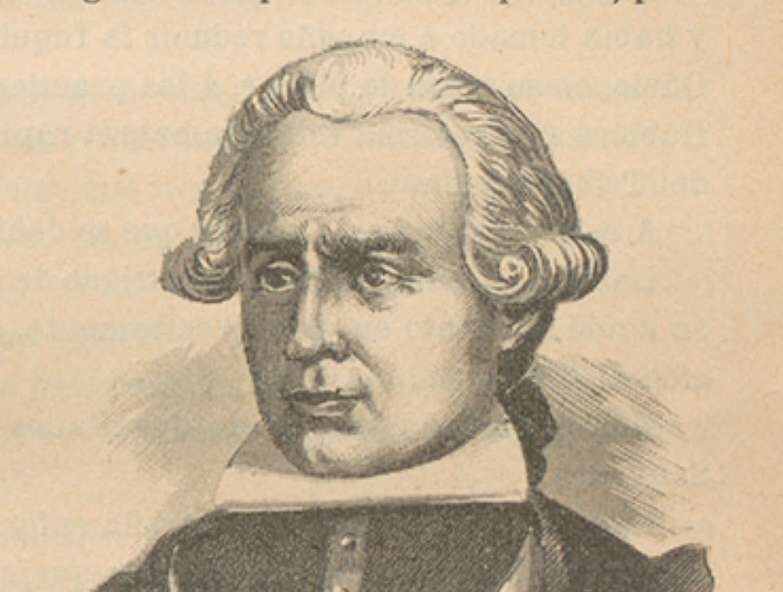
Jovellanos in the context of the Enlightenment
As a man of the Enlightenment, Jovellanos believed that knowledge and education were the basis for the progress of society. He wrote on economics, politics, law and agriculture, but also on history and regional culture. His thinking was influenced by the European Enlightenment, but he adapted it to the Spanish reality and, more specifically, to that of Asturias.
Jovellanos recognised the value of Asturian as a fundamental part of the Principality’s cultural heritage, as he considered it not only a vehicle of communication, but also a symbol of history and belonging.
Jovellanos and the Asturian language
In the 18th century, Asturian was a language spoken by the majority of the region’s rural population, but it was totally absent from official, academic and literary circles. Asturian was seen as a dialect without prestige, associated with the working classes, while Castilian dominated in administration and written culture.
Strictly speaking, Jovellanos was not a writer in the Asturian language, but he did defend its use and cultural value. In his private writings and correspondence, he showed a remarkable appreciation for Asturian, recognising its linguistic richness and its potential as a literary vehicle. He deeply valued Asturian orality, popular songs, proverbs and oral tradition.
One of the clearest examples of his commitment to the Asturian language was his interest in the compilation of the Asturian lexicon. It is known that he promoted and supported the compilation of a Dictionary of Bable, a work that was never completed in his time, but which shows his interest in preserving the language from oblivion.
Moreover, Jovellanos encouraged other scholars to pay attention to Asturian, paving the way for linguistic research in later centuries. His work served as a basis for future regulations and philological studies that have contributed to the revitalisation of the language.
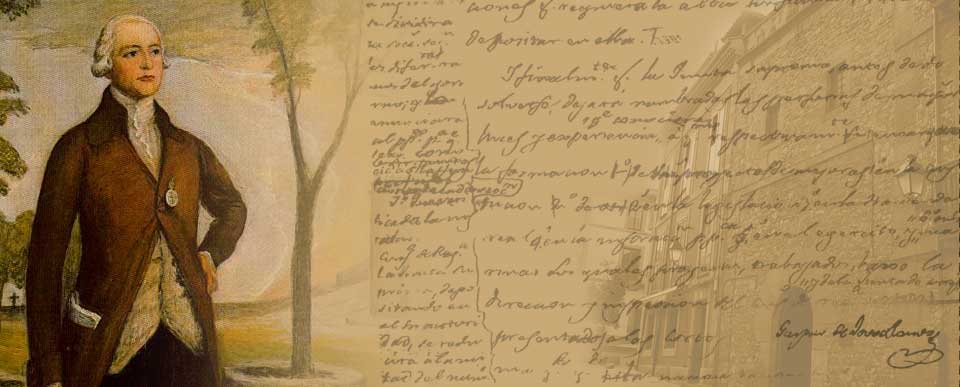
The Unfinished Letter on the Asturian Dialect (1791)
This is an unfinished essay (hence «interrupted») in which Jovellanos analyses the state of the Asturian dialect in his time. It is not a technical linguistic treatise, but a learned and personal meditation on the language, its value, its origin, its evolution and its use, from both a philological and a political-cultural perspective. It is therefore considered a fundamental precedent for the philological study of Asturian.
In this work, Jovellanos explains the reasons that led him to study the Asturian language:
«When I set out on my journey to this country I believed that the dialect spoken by its people would be one of the first objects of my observations. I had heard it spoken all the time and I still understood and spoke it perfectly in my childhood, but even so I could not observe its nature, nor was I able to go back to its origins. The study of the humanities later made me realise how necessary it was for the understanding of the language to examine its syntax analytically and, more particularly, to investigate the origins of its words, and this conviction, together with the progress acquired by virtue of it in my observations of the Castilian language, led me naturally to meditate on the origin of my natural dialect. I then realised that being preserved only in tradition and usage, and lacking entirely in print and in writing, it was impossible to make any progress whatsoever by not coming here to make up for the lack of such necessary aids with the living voice».
In the same letter, he defines Asturian linguistically:
«I also want to say, to get into the matter as soon as possible, that the Asturian dialect is the legitimate son of the Latin language alone, not because it has absolutely no voice that does not derive from it, but because most of its voices have their root there and because its nature and character are entirely in accordance with those of this mother tongue».

The linguistic and cultural legacy of Jovellanos
Although he did not write literary works in Asturian, Jovellanos laid the ideological and philosophical foundations for the recognition of this language as a cultural asset worthy of protection. He was one of the first to value the Asturian language from an enlightened perspective, moving away from the usual contempt for vernacular languages.
At a time when Asturian is still seeking its full place in the institutional and educational spheres, Jovellanos’ example continues to be an inspiration. His thinking reminds us that language is not only a means of communication, but also a way of seeing, feeling and being in the world.
Carlos Sánchez Luis