

The Baltic languages are a group of Indo-European languages spoken mainly in the areas extending east and southeast of the Baltic Sea in Europe. It consists of two principal languages that still exist toda, Latvian and Lithuanian, although it is true that other Baltic languages existed in the past, such as Prussian, which is now extinct. Together with the Slavic languages, they form the Balto-Slavic branch of the Indo-European language family —in fact, Baltic and Slavic are the closest of all recognizable phylogenetic groups within the Indo-European family—.
Geolinguistic context
Although the name ‘Baltic Republics’ is conventionally used to refer to Estonia, Latvia and Lithuania, it should be pointed out that Estonian is an Ugrophinian language, belonging to the Uralic language, and has no connection with Lithuanian, Latvian or any other Indo-European language.
The speakers of modern Baltic languages are mainly concentrated within the borders of Lithuania and Latvia. Historically, these languages were spoken over a larger area: west to the mouth of the Vistula in present-day Poland, east at least to the Dnieper River in present-day Belarus, perhaps even as far as Moscow, and south perhaps as far as Kiev. However, the historical expansion of the use of Slavic languages to the south and east, and of Germanic languages to the west, reduced the geographical distribution of the Baltic languages to a fraction of the area originally occupied.
Historical note
Some theories suggest that the Indo-European tribes speaking the languages that would later give rise to the Baltic languages would have settled in the southern part of the Baltic coast around the 13th century BC, and, from there, would have later migrated towards the coast, entering a settlement of fishermen and farmers who spoke a Proto-Phinician language. It is believed that this indigenous population eventually assimilated among the Baltic populations.
Although the various Baltic tribes were mentioned by ancient historians as early as the beginning of the 1st century B.C., the first evidence of a Baltic language proper dates back to the Middle Ages, around the middle of the 14th century. However, we will have to wait until the 16th century to find the first written testimonies in the Lithuanian language, including the catechism of Martynas Mažvydas, published in 1547. For its part, Latvian appeared in a hymn in 1530 and in a catechism printed in 1585. One of the reasons given to explain the delay in the appearance of written testimonies in Baltic is that these peoples were very reluctant to Christianization, which delayed the introduction of writing and isolated their languages from external influences.
It should also be noted that the Baltic languages took a long time to gain official recognition. During the times of the Polish-Lithuanian Commonwealt (1569-1795), which politically grouped the Kingdom of Poland and the Grand Duchy of Lithuania, official documents were written in Polish, Ruthenian and Latin, with both Lithuanian and Latvian being almost exclusively an oral language among the lower classes.
After the Partitions of Poland, much of the Baltic lands came under the yoke of the Russian Empire, where the writing or public use of vernacular languages, including Lithuanian and Latvian, tended to be forbidden. The Tsarist administration imposed a Russification process in the Baltic regions, even prohibiting the printing of books using the Latin alphabet (the writing system of Lithuanian and Latvian).
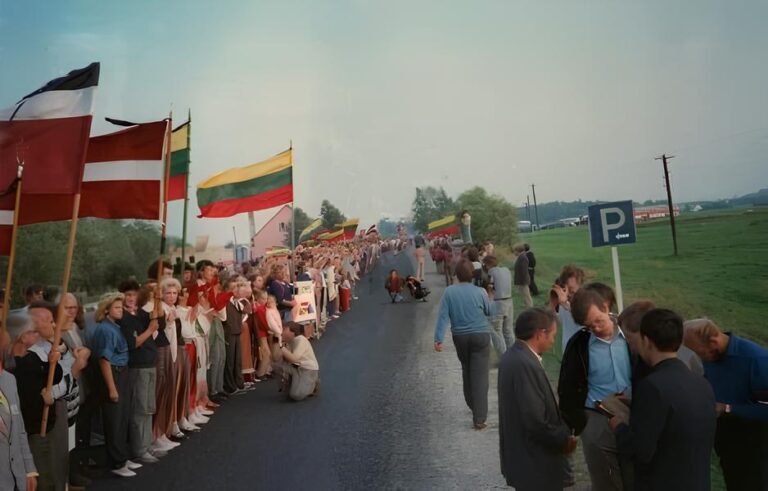
Under Soviet domination (until 1990), the treatment of the Lithuanian and Latvian languages was a combination of Russification policies and relative preservation of the autonomous languages. However, official recognition would not come until after independence was achieved, when both Lithuanian and Latvian became key symbols of national identity.

Classification of Baltic languages. The case of Prussian
The Baltic language group is divided into two subgroups: the Western Baltic, which is composed only of now extinct languages, and the Eastern Baltic, which contains the still living languages of the group, that is, Lithuanian and Latvian. Among the languages of the western subgroup, Old Prussian, the language spoken by the inhabitants of the area later called East Prussia (today divided between Poland, Lithuania and the Russian region of Kaliningrad), before the German and Polish colonizations of the 13th century, is particularly noteworthy. After this colonization, a dialect of East Low German, also called Prussian, began to be spoken, so it is important not to confuse the two. Old Prussian probably ceased to be spoken around the end of the 17th century, being the most archaic of the three languages (Lithuanian, Latvian and Prussian).
Similarities and differences between Baltic languages
Both languages, Latvian and Lithuanian, share a common origin in the Baltic group of languages, which gives them a similar grammatical and lexical basis. Both Latvian and Lithuanian retain many Proto-Indo-European linguistic features that have been lost in other Indo-European languages, which gives them a certain archaizing character. Both languages have a similar syntax, with a complex nominal and verbal inflection, which differentiates them from other modern Indo-European languages.
However, despite sharing a common root, the vocabulary of the two languages has evolved in a different form. Lithuanian, in particular, is more conservative and has retained many archaic words that are no longer found in Latvian. Latvian has a more simplified phonetic evolution compared to Lithuanian. In Lithuanian, the vowels remain more stable, while in Latvian there has been a greater simplification in the number of vowels and in the systems of tones.
Latvian has been more influenced by neighboring languages, such as German, Russian and Swedish, while Lithuanian has better maintained its ‘linguistic purity’ and has been less influenced by foreign languages.
In summary, the Baltic languages constitute a fascinating group within the Indo-European languages, with a rich history and a deep connection to the cultural identity of the Baltic countries.
At our translation agency, FAST.txt, we have specialized translators for both Lithuanian and Latvian. We have been translating into these languages for years, and our clients have always been satisfied with the quality of our work. If you want to translate into any of these languages, whatever the field, and you don’t know who to turn to, we have the solution for you. Contact us and we will select the specialized translator that best suits what you are looking for. Rely on FAST.txt.
Carlos Sánchez Luis