
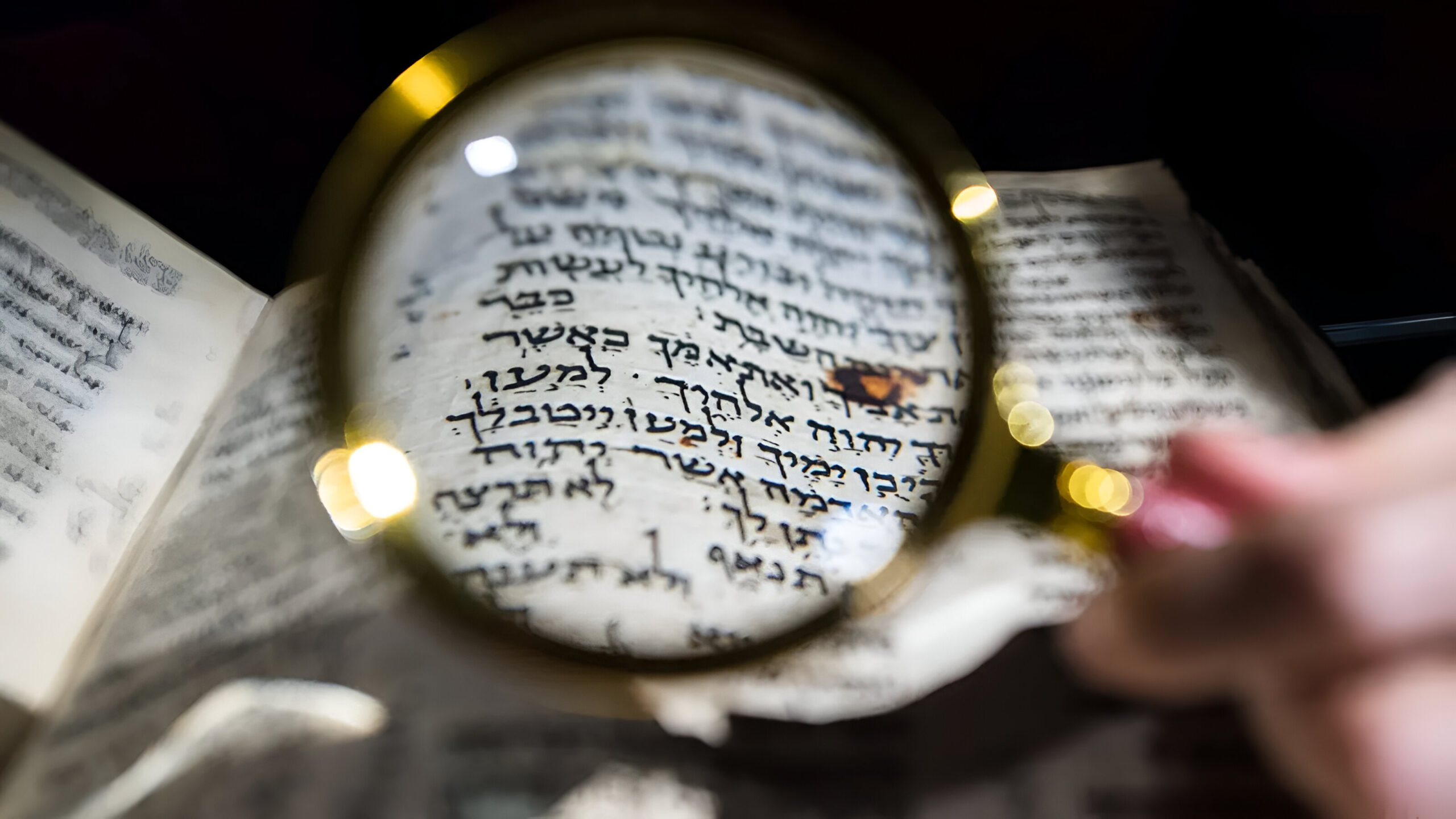
Today, Hebrew is a flourishing language, used by millions of speakers around the world to communicate all their thoughts and desires. However, this might have seemed unthinkable less than 150 years ago, when it was thought that this language was only used in the Jewish religion, to study the sacred texts. For some two millennia, Hebrew remained dormant as Jewish communities dispersed around the world and adopted the languages of their new homes. In fact, at the dawn of the 19th century, Hebrew was still far from becoming the common language of the Jewish communities.
Ancient Hebrew: origins and periodization
The Hebrew language (Hebrew: ת י ִ ר ב ְ ִ ע , pronounced [ivrît]) is the written, liturgical and prayer language employed by Judaism, where it functions as a sacred language. According to Jewish tradition, Hebrew would have been the language chosen by God to transmit his message to mankind.
The exact origins of the Hebrew language are still shrouded in mystery, although the oldest Hebrew texts that have come down to us date from the end of the 2nd millennium BC. Hebrew belongs to the northwestern group of Semitic languages and, within these, to the subgroup of Canaanite languages. Hebrew is a language with more than thirty-three centuries of written history; and, in such a long period of time, the language has undergone several processes of linguistic change. Taking into account the periods in which the Hebrew language was used and developed, we can establish a fundamental separation between ancient Hebrew, on the one hand, and modern Hebrew, on the other. However, Ancient Hebrew can be classified more precisely according to its historical evolution.
Ancient Hebrew was a Semitic language spoken in the region of Canaan, identified with the Syrian-Palestinian corridor. This phase coincides with the appearance of the first biblical texts, which are written in a variant of the Phoenician alphabet. Since ancient Hebrew was used for a very long period of time, the language underwent important changes during that period, so it is possible to divide it into several sub-periods: archaic Biblical Hebrew or proto-Hebrew (s. coinciding with the monarchic period (until the Babylonian exile); the Late Biblical Hebrew (VI-III century B.C.), which corresponds to the Persian domination; the Hebrew of the Dead Sea Scrolls (III century B.C.-I century A.D.), which would embrace the Hellenistic and Roman period prior to the destruction of the Second Temple in Jerusalem; and, finally, the Hebrew of the Mishnah (I-III century A.D.), an exegetical body of Jewish law that collects and consolidates the Hebrew oral tradition developed over centuries since the time of the Torah (it is the first important work of rabbinic literature).
However, it is believed that Hebrew must have ceased to be spoken around the 4th century B.C., although it continued to be used in literature and, above all, in liturgy. In Palestine it was replaced as the main language spoken by Aramaic, the language in which Jesus of Nazareth expressed himself.
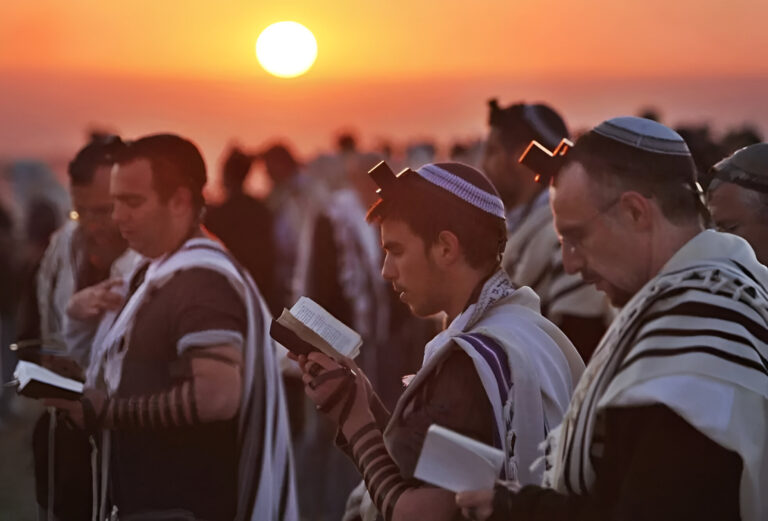
The case of Yiddish
As a result of the Diaspora -the process of dispersion of the Jewish people throughout the world-, the languages associated with the Jewish communities have been basically two: Yiddish among the so-called Ashkenazic Jews (from Central and Eastern Europe) and Ladino or Judeo-Spanish among the so-called Sephardic Jews from the Iberian Peninsula -who were expelled at the end of the 15th century and settled mainly in the territories belonging to the Ottoman Empire. We will focus here on the first of them: Yiddish.
Yiddish is one of the many languages developed and used by Jews in various parts of the Diaspora. For centuries and until World War II, it was a language of daily use and mother tongue for a vast society of Jews residing in Central and Eastern Europe. It arose as a result of intensive and lengthy contact over time between the Germanic and Slavic linguistic (and cultural) areas. At first, Yiddish was used as a mere communication tool between different groups of Jews, but it eventually became a symbol of Ashkenazi European civilization.
The syntactic basis and a large part of the lexicon of Yiddish come from High German, although it is also influenced by Hebrew and some Slavic languages. In this respect, it should be noted that the Yiddish orthography uses the Hebrew alphabet characters.
Although this language had a large number of speakers at the beginning of the 20th century, it has since suffered a significant decline in its use due to several factors. On the one hand, the majority of Zionists —supporters of the establishment of a state for the Jewish people in Palestine— began to consider Yiddish as the language of exile, calling for the recovery of Hebrew as the common language of the Jews. On the other hand, during World War II and the Shoá (Holocaust), many of the European Jews were exterminated or, at best, were forced to emigrate to other places (United States, Israel, Latin America…), where they mainly adopted the local languages instead of continuing to use Yiddish.
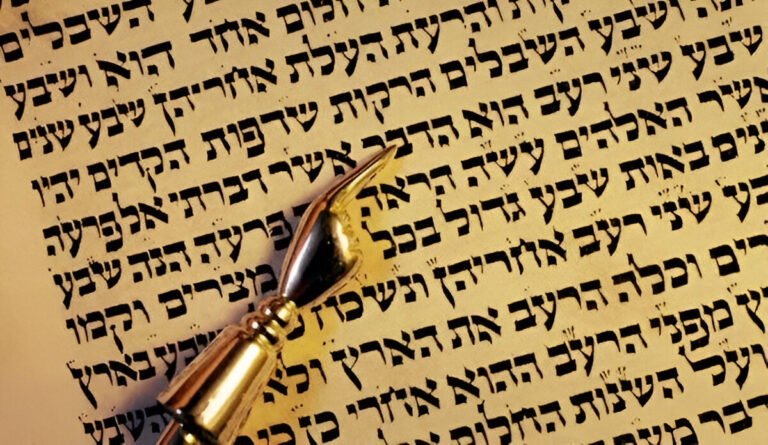
The renaissance of Hebrew
The ‘Hebrew Renaissance’ is the name given to the process that took place in Europe and the Mediterranean Levant region in the 20th century, which brought about a radical change in the linguistic situation of the Hebrew language from a language of liturgical use to a language used in everyday life. This is when Modern Hebrew was born.
The leaders of the Zionist movement saw Hebrew as a key element in the creation of a Jewish national identity, and worked hard to revive and modernize the language. The Jewish linguist and journalist Eliezer Ben Yehuda is considered the main architect and promoter of the Hebrew language renaissance.
The process began when Jews from various regions began arriving and settling alongside the pre-existing Jewish community in Palestine during the first half of the 20th century. Arabic-speaking Jews in Palestine and the linguistically diverse Jewish newcomers switched to Hebrew as the lingua franca.
After the demise of the Ottoman Empire (1920), Modern Hebrew became one of the official languages of the British Mandate of Palestine and, after the Declaration of Independence of Israel in 1948, one of the two official languages of the new state, along with Modern Arabic. However, as of July 2018, Modern Hebrew has become the sole official language of the State of Israel.
Today, Modern Hebrew is a living and evolving language with a rich culture and literature. Many words in modern Hebrew come from Biblical Hebrew, but there are also many words borrowed from other languages, such as Arabic, Yiddish and English. In addition to being the official language of Israel, Modern Hebrew is also spoken by Jews around the world, and is used in Jewish communities in many countries.
At our translation agency, FAST.txt, we have translators specialized in different languages, including Modern Hebrew. If you want to translate into Hebrew, whatever your field, and you don’t know who to turn to, we have the solution for you. Contact us and we will select the specialized translator that best suits what you are looking for. Rely on FAST.txt.
Carlos Sánchez Luis