
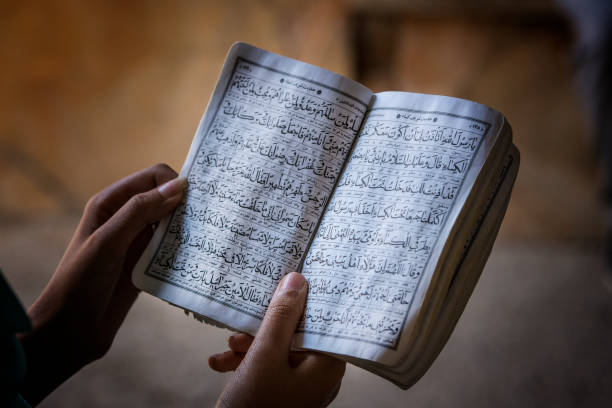
The Indo-Iranian languages constitute one of the largest and most influential branches of the Indo-European family, both in terms of the number of speakers and their historical and cultural legacy. This linguistic subgroup groups together a mosaic of languages spread mainly in South and Southwest Asia, including countries such as India, Pakistan, Iran, Afghanistan, and parts of Central Asia. It represents, therefore, the easternmost branch of the Indo-European linguistic group.
The study of Indo-Iranian languages allows us to understand not only the diachronic aspects of language in these regions, but also questions related to migratory movements, sociocultural transformations and religions that developed over the millennia..

Proto-Indo-European, common stock
From a historical point of view, the Indo-Iranian languages have their origins in the common stock of Proto-Indo-European, which, according to one of the strongest hypotheses, would have originated in the Pontic steppes – the region between the Black Sea and the Caspian Sea, today parts of Ukraine, Russia and Kazakhstan – around 4000-3000 BC.
In the 1950s, the Lithuanian-American archaeologist Marija Gimbutas associated the Proto-Indo-European language with the culture of the Kurgans, so called because of the burial mounds characteristic of their burials. These peoples were pastoral nomads who, around 4000-2500 B.C., must have made a series of migrations from the steppes to Europe, Asia Minor and Central Asia, a fact that explains, a priori, the expansion of the Indo-European languages.
However, other authors do not share Gimbutas’ view; this is the case of the British archaeologist Colin Renfrew, who places the origin of the Proto-Indo-European in Anatolia around 7000-6000 BC, associated with the expansion of agriculture in the so-called “Fertile Crescent”. However, recent genetic evidence tends to favor the Kurgan theory.
From Proto-Indo-European to Indo-Iranian languages
When it comes to explaining the splitting of Indo-European into different linguistic groups, one of the best known divisions is that which proposes a primordial classification of the Indo-European languages on the basis of two branches: the centum languages (“hundred” in Latin) and the satem languages (“hundred” in Avestic). The westernmost languages belong to the first group (Celtic, Germanic, Italic, Greek, Tocharian), while the easternmost ones belong to the satem group (Baltic). The difference between the Centum and Satem languages lies in how certain sounds evolved from Proto-Indo-European, especially the palatovelar consonants, but we will not delve into this, as it could easily be the subject of another publication.
What interests us here is to see how the Indo-Iranian linguistic group originated from the common Proto-Indo-European stock. Well, from the Satem dialects, the Proto-Indo-Iranian language group, which probably developed in the region of Central Asia or east of the Caspian Sea, split off, and which has been associated with the archaeological culture of Andronovo, chronologically located between 2000 and 900 BC.
Subsequently, the Proto-Indo-Iranian people split into two main branches: the Indo-Aryans, on the one hand, who migrated southward, entering the Indian subcontinent from the northwest; and the Iranians, on the other, who settled on the Iranian plateau and adjacent areas. Indo-Aryan gave rise to Vedic, which later evolved into ancient Sanskrit. For its part, Iranian evolved into languages such as Avestan, first, and then Old Persian.
The Sanskrit
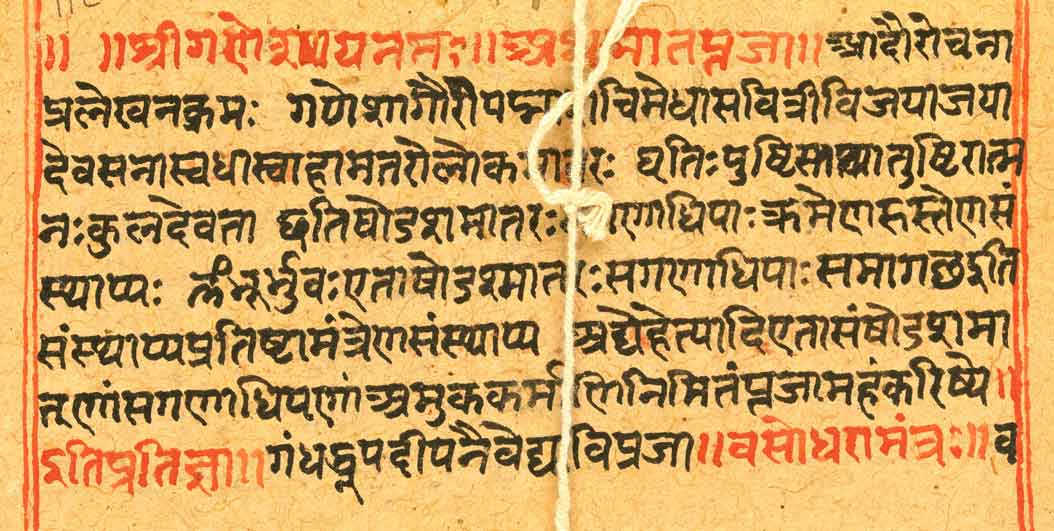
Sanskrit, the classical language of ancient India, occupies a central place in the history of Indo-Aryan languages and in the cultural tradition of South Asia. It developed from Vedic, an archaic form used in the oldest religious texts of Hinduism, the Vedas, dating from about 1500 B.C. This language was not only a vehicle of religious expression, but comprises a complex philosophical, scientific and literary tradition. Works such as the Upanishads, the Mahābhārata, the Rāmāyaṇa and numerous treatises on grammar, medicine, mathematics and astronomy were composed in Sanskrit. Unlike many ancient languages that disappeared over time, Sanskrit was preserved as a cultured and liturgical language, maintaining its influence over the centuries. In fact, Sanskrit is still used today in Hindu and Buddhist religious contexts.
Sanskrit, the classical language of ancient India, occupies a central place in the history of Indo-Aryan languages and in the cultural tradition of South Asia. It developed from Vedic, an archaic form used in the oldest religious texts of Hinduism, the Vedas, dating from about 1500 B.C. This language was not only a vehicle of religious expression, but comprises a complex philosophical, scientific and literary tradition. Works such as the Upanishads, the Mahābhārata, the Rāmāyaṇa and numerous treatises on grammar, medicine, mathematics and astronomy were composed in Sanskrit. Unlike many ancient languages that disappeared over time, Sanskrit was preserved as a cultured and liturgical language, maintaining its influence over the centuries. In fact, Sanskrit is still used today in Hindu and Buddhist religious contexts.
The Persian
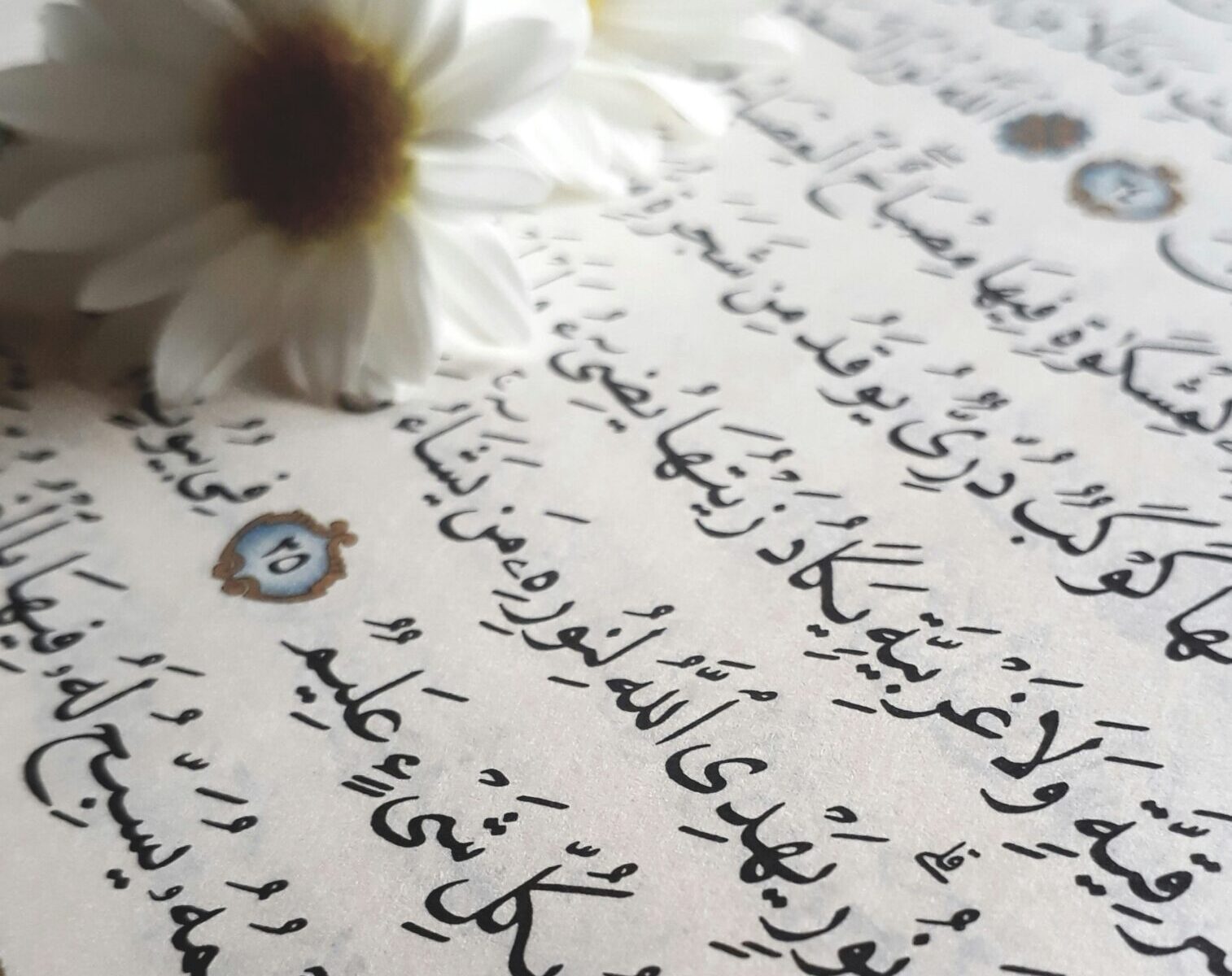
Persian, also known as Farsi, is one of the oldest Iranian languages with historical continuity and one of the most influential in the Islamic world. Its history dates back to Old Persian, the official language of the Achaemenid Empire (6th to 4th centuries BC), used in inscriptions such as those in the famous city of Persepolis. Later, Middle Persian (or Pahlavi) was the language of the Sassanid Empire and its official religion, Zoroastrianism, reflecting the cultural, religious, and administrative life of ancient Persia. With the arrival of Islam and the Arab expansion, New Persian emerged, adopting the Arabic alphabet and becoming a prestigious literary language not only in Iran but also in Central Asia, Afghanistan, India, and the Caucasus.
For centuries, Persian was the language of high culture, poetry, and administration in large parts of the Islamic world. In the courts of Islamic empires —such as those of the Ghaznavids and the Mongols— Persian was the language of the elite, used in poetry, philosophy, history, and science. In addition, Persian had a profound influence on other languages, such as Urdu and Ottoman Turkish, leaving a remarkable lexical and stylistic legacy.

Current Overview
Today, Indo-Iranian languages continue to be highly relevant, both in terms of the number of speakers and their cultural impact. Indo-Aryan languages, such as Hindi, Bengali, and Urdu, are spoken by hundreds of millions of people on the Indian subcontinent, making them some of the most widely spoken languages in the world. On the other hand, Iranian languages, such as Persian, remain fundamental in Iran, Afghanistan, Pakistan, and some regions of Central Asia.
Need to connect with the vast world of Indo-Iranian languages? At FAST.txt, we offer language and specialized translation services in languages such as Hindi, Bengali, Urdu, Persian, and Kurdish. Whether you need to translate legal documents, web content, or technical material, our native professionals guarantee accuracy and quality in every assignment. Don’t hesitate to contact us: trust FAST.txt!
Carlos Sánchez Luis